Why upholstery boat seats matter more than most owners expect
Upholstery boat seats play a bigger role than simple comfort. They affect how long your interior lasts, how easy it is to maintain, and even how your boat feels during long days on the water. For owners who want professional results, for upholstery boat seats services with your specific boat model, you can visit this specialized marine upholstery service and see what options are available.
In real US boating conditions, seats face constant sun exposure, saltwater, humidity, and heavy use. Unlike automotive interiors, marine upholstery must handle all of this without cracking, fading, or losing support. That is why material choice and construction quality matter from day one.
Common materials used for upholstery boat seats
Most modern upholstery boat seats rely on marine grade vinyl, but not all vinyl performs the same way. Cheaper materials may look fine at first yet fail quickly under UV stress.
High quality marine upholstery materials usually offer:
- UV inhibitors to slow fading and surface breakdown
- Mold and mildew resistance for humid climates
- Reinforced backing to prevent stretching
- Color stability designed for open deck exposure
Some premium boats also use marine leather alternatives or hybrid fabrics. These materials improve breathability and surface comfort, especially in hot climates like Florida, Texas, or Southern California.
How seat construction affects long term comfort
The upholstery itself is only part of the equation. Seat construction underneath the surface determines how comfortable and durable upholstery boat seats feel over time.
Important construction details include foam density, drainage design, and stitching quality. High density foam holds its shape longer and resists water absorption. Proper drainage prevents water from pooling inside cushions, which helps avoid mildew and internal rot.
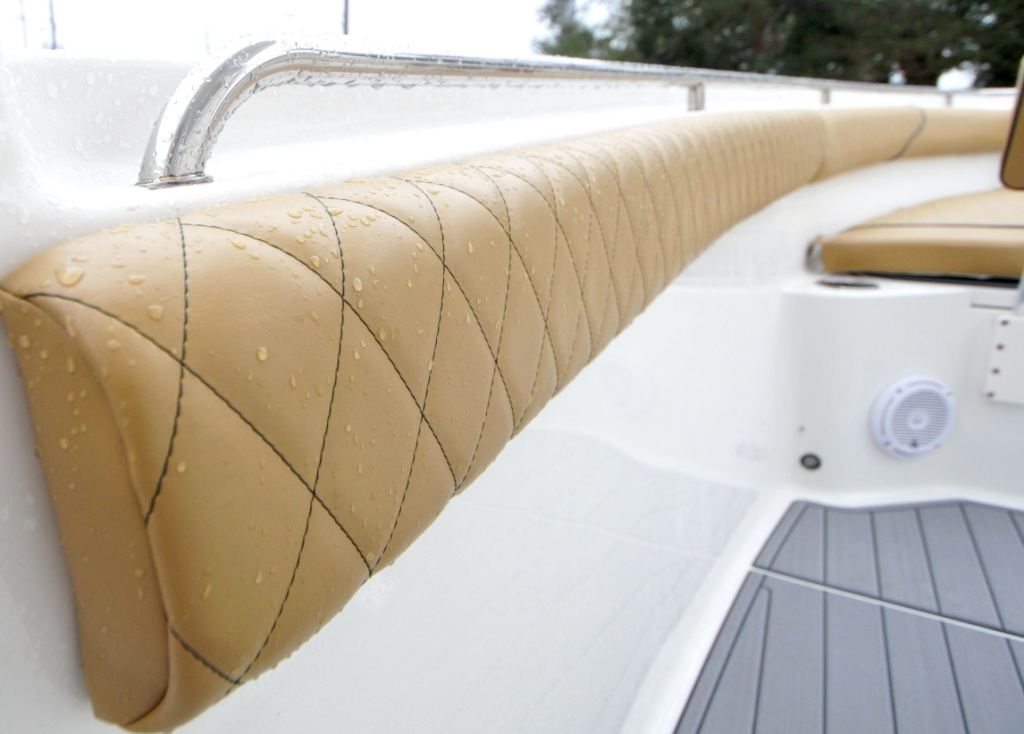
Stitching also deserves attention. Marine grade thread resists UV damage far better than standard thread, which often fails before the upholstery surface does.
Upholstery boat seats and real world usage
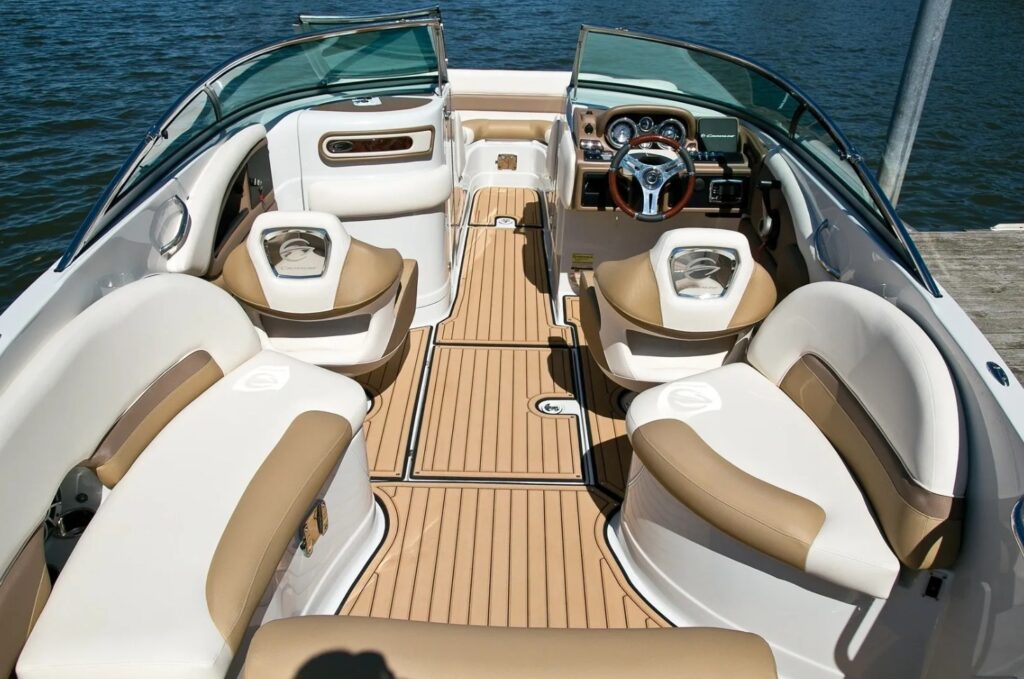
Different types of boating put stress on seats in different ways. A family cruising boat sees steady daily use, while fishing boats face constant moisture and movement. Performance boats may experience high vibration and sun exposure at speed.
That is why upholstery boat seats should match how the boat is actually used. A purely decorative interior may look impressive but struggle during regular operation. Practical layouts with reinforced seating areas tend to age better and require fewer repairs.
Signs your boat seats need professional attention
Boat owners often wait too long before addressing upholstery problems. Early intervention saves money and preserves interior structure.
Watch for these warning signs:
- Cracking or stiffness on seating surfaces
- Loose seams or visible thread wear
- Foam that feels flat or uneven
- Persistent moisture smell after cleaning
Once these issues appear, simple cleaning no longer solves the problem. Professional upholstery work restores both appearance and structural comfort.
Care routines that extend upholstery lifespan
Maintaining upholstery boat seats does not require complicated routines. Small habits make a noticeable difference over time.
Effective care includes:
- Rinsing seats with fresh water after salt exposure
- Drying surfaces before covering the boat
- Using marine safe cleaners only when needed
- Avoiding harsh brushes that damage protective coatings
Consistent care keeps materials flexible and stitching intact, especially during peak summer months.
Custom upholstery upgrades for modern boats
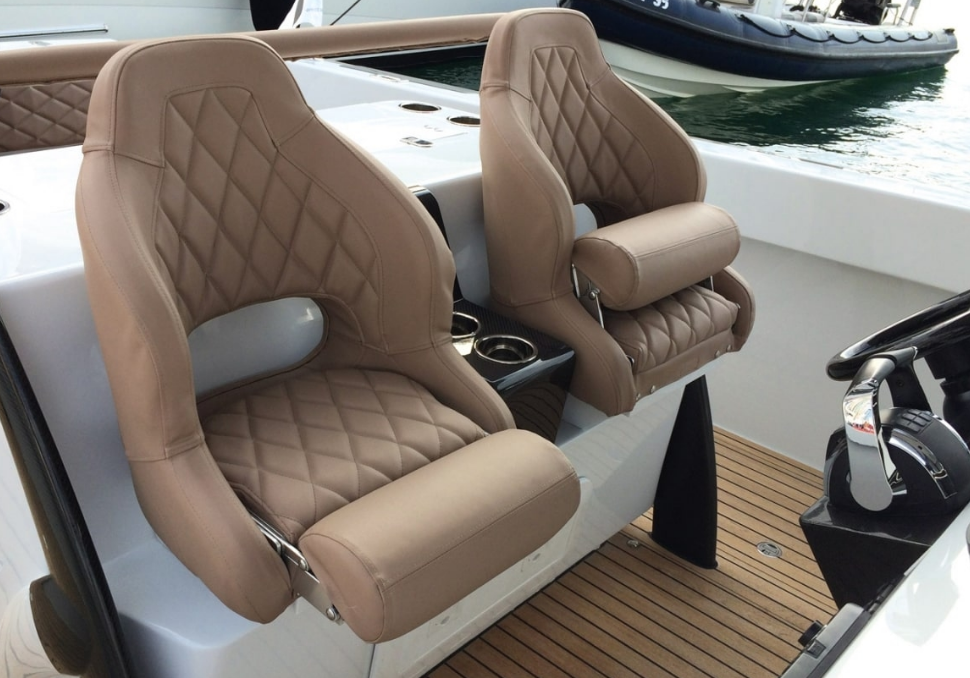
Many owners choose to upgrade upholstery boat seats rather than replace entire interiors. Custom work allows better color matching, improved foam support, and updated layouts.
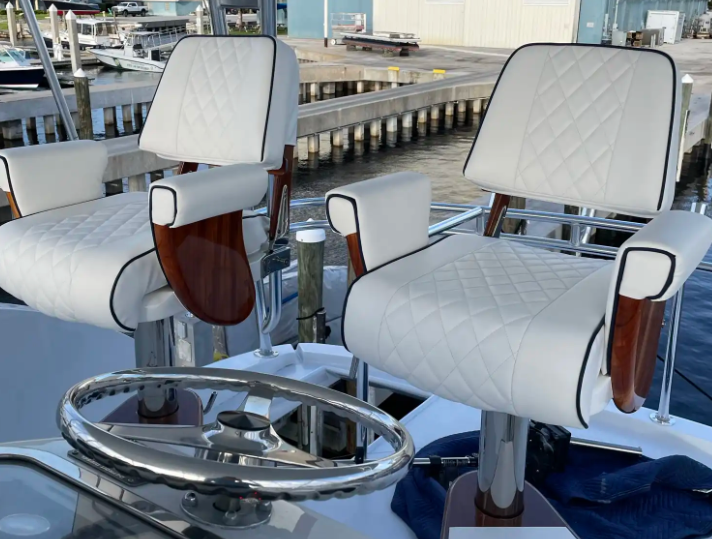
Popular upgrades include improved bolstering for helm seats, thicker sun pad cushions, and redesigned seating for better passenger flow. These changes enhance comfort without altering the boat’s original design.
Custom upholstery also adds resale value. Buyers often judge a boat by its interior condition before inspecting mechanical systems.
Climate considerations for US boat owners
Boating conditions vary widely across the United States. Upholstery boat seats in northern climates face freeze and thaw cycles, while southern boats battle year round sun and humidity.
Choosing materials rated for your region reduces maintenance headaches. UV focused protection matters more in coastal and southern states, while moisture control becomes critical in lakes and rivers with frequent rain exposure.
When replacement makes more sense than repair
Not all upholstery issues can be fixed with patchwork. When foam saturation, structural damage, or extensive UV cracking occurs, full replacement becomes the smarter choice.
Replacing upholstery boat seats allows owners to reset comfort levels and correct design flaws from the original build. Done correctly, it can make an older boat feel surprisingly modern.
Final thoughts on upholstery boat seats
Upholstery boat seats are one of the most used and most overlooked parts of any boat. They directly affect comfort, safety, and long term value. Choosing the right materials, caring for them properly, and knowing when to upgrade makes boating more enjoyable and less stressful.
For owners who want dependable results and long lasting interiors, professional upholstery work remains one of the smartest investments you can make.