Boat interiors are receiving more attention as American owners look for practical ways to improve older vessels. Instead of replacing an entire boat, many are focusing on areas that directly affect everyday comfort, including seating and cushions. This shift is increasing interest in modern boat upholstery material options designed to handle sunlight, moisture, salt, and frequent use. For professional marine upholstery services, Boat Upholstery Broward specializes in custom upholstery for boats and yachts.
Marine Seating Becomes a Growing Upgrade Priority
Boat owners have traditionally focused upgrade budgets on engines, electronics, and navigation equipment.
However, interior improvements are becoming an increasingly visible part of boat ownership. Seating receives constant use and can quickly show signs of aging, particularly on vessels that spend most of the year outdoors.
Cracked vinyl, faded surfaces, and flattened cushions can make an otherwise well-maintained boat look significantly older.
As a result, upholstery restoration is becoming a practical upgrade rather than a purely cosmetic project.
New Materials Address Common Marine Problems
Modern marine upholstery products are designed around the conditions found on the water.
Exposure to UV radiation can weaken and fade unsuitable materials. Moisture can create additional problems, particularly when cushions remain wet for extended periods.
A quality boat upholstery material can offer resistance to several common sources of deterioration.
Important characteristics include:
- UV resistance
- Water resistance
- Mold and mildew resistance
- Color retention
- Easy cleaning
- Resistance to everyday wear
These qualities are particularly relevant for open boats with exposed seating.
Climate Influences Material Decisions
The United States presents a wide range of boating environments.
Florida boat owners may deal with intense sunlight, humidity, and saltwater throughout much of the year. Boaters in northern states face seasonal storage and significant temperature changes.
This means there is no single material choice that works equally well for every vessel.
Owners should consider local conditions before selecting a boat upholstery material for a restoration or replacement project.
Comfort Remains a Major Consideration
Durability is important, but comfortable seating remains essential.
Boat owners may spend several hours fishing, cruising, entertaining guests, or traveling between destinations. Worn foam can reduce support and make extended trips less enjoyable.
For this reason, upholstery projects increasingly address both the exterior surface and the cushion underneath it.
Replacing deteriorated foam can restore shape and support while allowing new upholstery to perform more effectively.
Custom Designs Are Becoming More Common
Marine seating is also becoming more personalized.
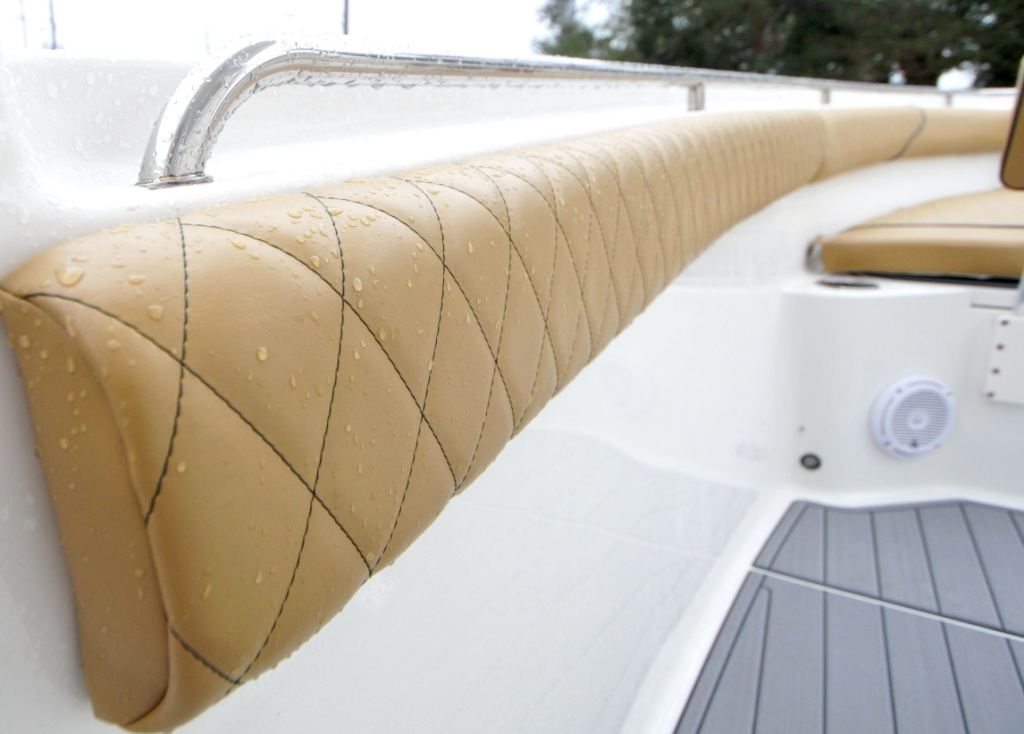
Owners can now choose from a broad selection of colors, textures, stitching patterns, and accent details. This allows an older interior to receive a completely different visual identity.
Popular design features include:
- Two-tone seating
- Contrast stitching
- Decorative piping
- Textured surfaces
- Custom embroidery
- Coordinated cushions
A modern boat upholstery material can provide the foundation for these customized designs.
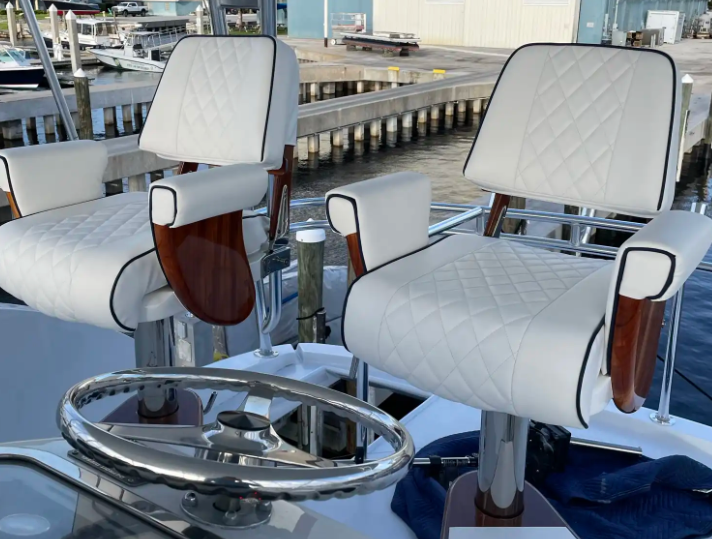
Helm Seats Receive Special Attention
The helm remains one of the most frequently used areas on many boats.
Captains may spend hours in the same seat, while the location can receive direct sunlight throughout the day. As a result, helm upholstery often shows wear before other seating areas.
During inspections, owners should look for cracking, fading, flattened foam, and loose seams.
Restoring the helm can provide an immediate improvement in both comfort and appearance.
Maintenance Continues After Installation
New upholstery does not eliminate the need for regular care.
Salt, sunscreen, dirt, and moisture can accumulate during normal boating activities. Removing these contaminants promptly can help protect the material.
Recommended habits include:
- Cleaning seating after regular outings
- Removing salt residue
- Drying wet cushions
- Cleaning spills promptly
- Inspecting seams
- Using appropriate marine cleaning products
Covers can also reduce exposure when boats remain at the dock.
Restoration Can Extend the Life of Older Boats
Replacing a vessel is not always the most practical solution.
Many older boats continue to provide reliable performance even when their interiors look dated. Updating the seating can improve the experience while allowing owners to keep the boat they already know and enjoy.
A boat upholstery material upgrade can therefore become part of a broader strategy for extending the useful life of an existing vessel.
What Owners Should Consider Before an Upgrade
A successful upholstery project starts with planning.
Owners should evaluate how they use their boat, where the seating is located, and what environmental conditions it encounters.
They should also consider whether the foam, stitching, and internal structure remain in good condition.
Taking these factors into account can help produce a more durable and consistent result.
Final Thoughts
Marine upholstery is becoming an increasingly important part of boat maintenance and modernization. As owners look for practical upgrades, seating offers an opportunity to improve comfort and appearance without making major changes to the vessel.
Choosing the right boat upholstery material can help protect seating from common marine challenges while providing greater freedom in design. With appropriate materials, quality installation, and regular maintenance, modernized interiors can remain comfortable and attractive through many boating seasons.